Small vs. Big Assisted Living: Why Intimate Settings Support Much Better ADLs
Business Name: BeeHive Homes of Bernalillo
Address: 200 Sheriff's Posse Rd, Bernalillo, NM 87004
Phone: (505) 221-6400
BeeHive Homes of Bernalillo
Beehive Homes assisted living care is ideal for those who value their independence but require help with some of the activities of daily living. Residents enjoy 24-hour support, private bedrooms with baths, medication monitoring, home-cooked meals, housekeeping and laundry services, social activities and outings, and daily physical and mental exercise opportunities. Beehive Homes memory care services accommodates the growing number of seniors affected by memory loss and dementia. Beehive Homes offers respite (short-term) care for your loved one should the need arise. Whether help is needed after a surgery or illness, for vacation coverage, or just a break from the routine, respite care provides you peace of mind for any length of stay.
200 Sheriff's Posse Rd, Bernalillo, NM 87004
Business Hours
Choosing an assisted living neighborhood is hardly ever just a housing decision. For many households, it is a turning point in a loved one's life, specifically around the most individual regimens: getting dressed, bathing, managing medications, and just getting from bed to chair without a fall. Those Activities of Daily Living, or ADLs, are precisely where small, intimate assisted living settings frequently outperform big, campus-style communities.
I have actually visited, examined, and assisted place seniors in both types of settings over the years. The pattern corresponds. Big buildings provide attractive amenities and hectic calendars. Small homes tend to offer more dependable, more personalized help with the fundamentals that genuinely keep somebody safe and dignified. The differences are subtle on a pamphlet, and striking in real life.
This post looks carefully at why that takes place, how to decide what your loved one truly needs, and where big communities still have an edge. The objective is not to declare a universal winner, but to match environment to person, especially around ADLs and hands-on elderly care.
What ADLs Really Mean in Daily Life
Professionals utilize "ADLs" constantly, so households in some cases nod along without fully visualizing what is consisted of. For placement decisions, it is worth decreasing and equating lingo into lived moments.
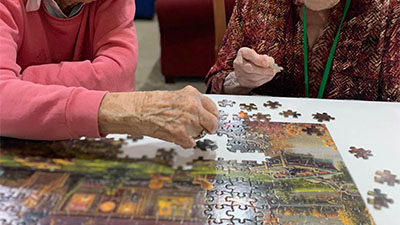
ADLs usually include bathing or showering, dressing, grooming, toileting, moving (for example, bed to chair), and eating. In some cases walking or using a mobility device is added to the list. On paper, it sounds like a list. In reality, each ADL has layers.
Bathing is not just stepping into a shower. It is getting someone to accept shower, changing water temperature, supporting a weak knee, washing hair thoroughly, and making certain they are totally dried to prevent skin breakdown. If your mother has dementia and hates water on her face, a hurried bath can seem like an assault. A calm, familiar caregiver who knows how to talk her through it can turn a dreaded ordeal into a bearable routine.

Dressing can be the trigger for agitation if somebody is pushed to hurry, or it can be an opportunity for discussion and orientation. Moving safely requires both enough personnel and the right technique, or the danger of falls increases quickly. Toileting help is deeply intimate and strongly tied to dignity. Small breakdowns in any of these areas tend to snowball: skipped baths, poor health, and an increased threat of urinary system infections, falls, and hospitalizations.
Because ADLs are so relational, the staff-to-resident ratio, the speed of the environment, and the consistency of caregivers matter as much as any formal care plan. This is where size comes into play.
How Size Shapes Care: The Structural Differences
When households compare communities, they frequently look initially at price, place, and appearance. Size prowls in the background up until you connect it to what the day in fact appears like for a resident.
Large assisted living neighborhoods generally have dozens, often hundreds, of locals. Wings or floors might be divided by level of care, memory care, or independent living. The structure often seems like a hotel, with a front desk, business kitchen area, and formal dining room. Staffing is scheduled in blocks: day shift, night, over night. Ratios can differ commonly, however lots of big homes hover around one direct care staff member for 8 to 15 homeowners throughout the day, with fewer at night.
Smaller settings can indicate various models. Some are "residential care homes" or "board and care" homes, typically in a transformed house with 6 to 12 citizens. Others are small lodges or homes with 10 to 20 homeowners grouped together. Staffing is generally more versatile and less layered. You might see one caretaker for 3 to 6 residents throughout the day, plus a med tech or nurse who likewise knows each resident personally.
From the outside, a big structure may feel more remarkable. Inside, size quickly impacts 3 things: the time a caretaker can spend with everyone, how well personnel know specific histories and routines, and how quickly someone responds when a resident requirements aid with an ADL. For seniors who still handle nearly whatever on their own, the distinction might feel small. For those needing hands-on assisted living assistance numerous times a day, it ends up being central.
Why Intimate Settings Tend to Support ADLs Better
Over time, I have actually seen small communities surpass bigger ones on ADL results for 3 main factors: connection of relationships, slower rate, and less handoffs.
In a small home, the personnel typically know each resident's morning rhythm. They bear in mind that Mr. Carter requires 10 minutes to "warm up" before he can pivot securely out of bed, or that Mrs. Lee chooses to shower every other evening after her preferred show. That knowledge is not just written in a chart. It lives in the staff due to the fact that they perform the exact same ADLs with the same people day after day.
In large buildings, staffing rosters frequently alter more frequently. A resident might see 3 different care assistants within 2 days, specifically across shift modifications. Each assistant implies well, but they might not understand that your father tends to get orthostatic dizziness when he stands too quickly, or that your mother needs a calm, recurring cue to sit fully back before a transfer. That lack of familiarity shows up in rushed showers, half-finished grooming, and a tendency to withdraw when a resident withstands, just due to the fact that the caregiver can not invest the extra 15 minutes it would take to develop trust.
The physical design matters too. In a 120-bed neighborhood, a caretaker might be accountable for two corridors and invest half their time strolling from space to room. If your parent rings for assistance getting to the toilet, staff may be 6 spaces away handling another resident's fall. Even a 5 to ten minute hold-up can be the distinction in between safe toileting and an incontinent episode that weakens self-respect and increases skin risk.
In a 10-resident home, caretakers are seldom more than a couple of actions away. They can hear somebody moving toward the bathroom, or notification that Mr. Johnson did not come out for breakfast and go check. Many ADLs are addressed preemptively, due to the fact that personnel see and respond to subtle changes before they end up being crises.
A Day in the Life: Big vs. Small, Through ADL Lenses
Imagining a day can clarify the trade-offs much better than any abstract chart.
Picture a large assisted living neighborhood. Breakfast is served from 7:30 to 9:00 in the main dining room. Transit time from a resident room may be a long hallway plus an elevator trip. One caregiver on the wing has 8 citizens needing some level of help up and down. The morning quickly becomes a rush. Homeowners who stroll separately go first. Those who require assistance dressing and moving may not reach the dining room till 8:45 or later on. Personnel do their finest, but a resident who is slow or resistant may have their bath "pushed" to the afternoon, then to another day.
Now image a small residential care home with 8 residents. Early morning is still a hectic time, but the environment is quieter and more versatile. Breakfast is often served at a family-style table near the bedrooms, and caretakers can serve locals in pajamas if required, then help them dress later. The staff are rarely more than a space away when a resident calls. ADL support ends up being a series of small, constant interactions instead of a scramble to strike scheduled tasks.
I have seen citizens who were labeled "resistant to care" in big settings move into small homes and accept bathing and dressing assist with minimal protest. The behavior did not alter due to the fact that of a habits plan in some abstract sense. It altered since personnel had time to technique slowly, use familiar language, change routines, and develop trust.
Staff Ratios, Training, and Real-World Care
Families often request for personnel ratios as if a number alone will inform the story. Numbers matter a great deal, but context identifies what they really mean.
In a small home with 6 citizens and 2 caregivers on daytime shift, each caregiver has time to fully help 3 people with morning ADLs, aid with meal prep, and still react to unscheduled needs. If one resident has an especially hard early morning, the other caretaker can cover. Locals see the very same familiar faces, which supports those with dementia or anxiety.
In a large structure with 60 citizens on a floor and 4 caretakers, the ratio on paper may seem comparable, but the work is more segmented. One person may handle all showers, another might pass medications, another might be accountable for two corridors of call lights and standard ADLs. Training can be standardized and sometimes more substantial, which is a genuine benefit. However, when the environment is hectic and task-driven, staff may default to "get it done" instead of "do it in the method finest matched to this individual."
From a senior care viewpoint, training and supervision often look much better on paper in big communities. There is generally a nurse on website, official in-service training, and business policies. Small homes differ widely. Some are exceptional, with knowledgeable caretakers and strong nurse oversight. Others may be thin on formal training, relying more on veteran personnel who "feel in one's bones" how to look after residents.
For hands-on ADLs, however, the basic question is: does my loved one get the time, repeating, and consistency needed to assisted living bernalillo nm keep doing as much as possible for themselves, with support where required? Intimate settings tend to win on that, especially for senior citizens who have a mix of physical and cognitive needs.
When a Big Neighborhood Might Be the Better Fit
It would be misleading to state small is constantly better for every older grownup. There specify scenarios where a larger assisted living community has clear benefits, even for residents with ADL needs.
Some elders genuinely flourish on variety, social energy, and structured activities. A retired instructor or executive who still enjoys lectures, outings, and several clubs might feel confined in a small home with just a few fellow homeowners. Even if they need help bathing and dressing, the total quality of life might be greater in a large, active setting.
Medical intricacy is another factor. While assisted living is not the like knowledgeable nursing, larger neighborhoods regularly have 24/7 nurse presence, on-site rehab, or close relationships with visiting doctors and therapists. For a resident with regular medication modifications, fragile diabetes, or a brand-new stroke, that medical facilities can be important. In those cases, you may accept some compromises on one-to-one ADL time in exchange for better tracking and rapid response.
Cost and accessibility also matter. In some areas, there are even more big neighborhoods than small homes, or the small homes have restricted openings. Families in some cases utilize large communities as a form of respite care, giving a short-term break to caretakers while a loved one recuperates from a disease or while everyone examines longer-term options. For a planned short stay, the richness of features in a larger setting might offset the threats of a less tailored ADL approach.
The secret is to be sincere about your loved one's priorities. If they mostly require friendship, light assistance, and delight in busy environments, a large neighborhood can be a terrific fit. If they are modest, quickly overwhelmed, or need frequent, hands-on help with every ADL, a smaller setting generally serves them better.
The Function of Intimacy in Dementia and ADLs
Dementia complicates every ADL. It impacts memory, sequencing, spatial awareness, language, and emotional policy. A lot of the most difficult behaviors households report - refusing showers, striking out throughout toileting, pacing all night - emerge from anxiety and confusion, not stubbornness.

In a big, unfamiliar structure, someone with dementia can feel lost several times a day. They may forget where the bathroom is, misinterpret complete strangers strolling down the hallway, or feel hurried by personnel who are trying to keep to a schedule. That anxiety shows up as resistance to care. Personnel might describe the person as "difficult", when in truth the environment is merely too stimulating and impersonal.
An intimate assisted living or small memory care home shortens the distances and increases predictability. Locals see the same caretakers, the exact same kitchen area, the exact same view out the window every morning. Caregivers can utilize constant scripts and routines: the same joke before showers, the same warm washcloth to begin face cleaning. Gradually, this familiarity lowers resistance and makes it possible to maintain ADLs longer, even as cognitive decrease progresses.
I keep in mind a resident who had actually been refusing showers in a larger memory care unit for weeks. She clenched her fists, shouted, and attempted to strike staff. Family were informed she "just doesn't like baths anymore." When she moved into a 10-bed home, the caregiver noticed that she unwinded whenever someone hummed a specific hymn. They developed a pre-shower routine around that song, rerouted her to a handheld shower she could see and manage, and permitted her to hold a towel across her chest. Within two weeks, she was bathing regularly again. Absolutely nothing in her brain changed. The environment and the method did.
For households navigating dementia, this is the heart of the small versus large question. Intimacy and repetition are not just "great to have" qualities. They are tools that straight support ADLs.
Practical Distinctions Households Will Notice
When you tour communities, a few of the most telling ideas are not in the pamphlet copy, but in the small interactions you witness. In a small home, you will typically see caregivers and locals moving in and out of the cooking area together, sharing small talk, and starting ADLs organically. A resident might be helped to clean up at the sink before breakfast, with a caregiver handing them a warm cloth and directing each step.
In a large structure, ADLs are more often scheduled and segmented. Showers might be "Monday, Wednesday, Friday at 10:30," and if your mother declined at 10:35, she might not get another attempt till the next scheduled day. Meals are at set times, and late sleepers may get "room trays" if they miss out on the window, frequently without the very same level of social engagement or assistance with eating.
Noise level, lighting, and space design matter for ADL success. Small homes tend to feel domestically familiar, which lowers anxiety for lots of seniors. Brilliant overhead lights and long corridors can be disorienting, especially for those with poor vision or cognitive decrease. In a small setting, staff can more quickly customize the environment. They might decrease the lights during evening care, play soft music during bathing times, or keep adaptive devices within reach.
Families also observe how quickly patterns are gotten. In small settings, if your father struggles with buttons, somebody will probably recommend pull-over shirts by the second or 3rd day, and you will see that reflected in how they help him dress. In a large setting, the same observation might be buried amidst many locals' needs, unless you or a strong supporter presses it into the written care plan and follows up.
A Simple Contrast List for ADL Support
When you tour or examine alternatives, it assists to have a focused lens on ADLs, not just aesthetic appeal or activity calendars. Utilize this brief list to compare how small and large settings might feel for your loved one:
- Ask staff to describe a normal morning for a resident who needs assist with bathing, dressing, and toileting. Listen for how much time they permit, and whether the routine noises rushed or flexible.
- Observe how staff address citizens in passing. Do they utilize names, touch, and eye contact, or are they mainly task focused and in a hurry in between rooms?
- Check how far spaces are from restrooms and dining areas. Envision your loved one making that trip 3 or 4 times a day.
- Ask how they adjust routines for someone who declines or fears bathing. Look for specific, concrete examples, not unclear peace of minds.
- Inquire about personnel continuity. Do the very same caregivers normally look after the exact same locals, or do assignments alter frequently?
You are listening less for polished responses and more for consistency, information, and signs that staff genuinely know their citizens as individuals.
The Role of Respite Care in Screening Fit
One underused strategy for households is to deal with respite care as a trial run. Lots of assisted living communities, both big and small, offer brief stays varying from a couple of days to a couple of weeks. Throughout that time, your loved one resides in the community as a temporary resident, receiving the very same senior care and elderly care services as long-term residents.
For ADLs, respite stays are extremely exposing. You will see how rapidly personnel discover your parent's routines, how typically call lights are answered, whether clothes are put away appropriately, and if hygiene and grooming look kept. Households in some cases discover that the remarkable big community struggles to manage specific behaviors or ADL jobs, while a basic small home manages them efficiently. Other times, the reverse takes place, especially if your loved one is more social and independent than you realized.
Respite care also provides your parent a voice. Even an individual with moderate cognitive decrease can typically inform you whether they feel looked after, rushed, lonely, or safe. Focus on whether they talk about "the people" by name in a small home, versus "the location" or "the structure" in a bigger one. That psychological connection typically correlates strongly with ADL success.
Balancing Dignity, Security, and Independence
At the heart of all these choices is a balancing act: dignity, security, and independence. Small, intimate assisted living settings tend to protect dignity and security by closely supporting ADLs and minimizing the chance of lapses. They also, when succeeded, assistance self-reliance by providing residents simply enough help, not too much.
A good caregiver in a small home will know that Mrs. Daniels can still brush her teeth separately if someone simply sets out the toothbrush and cues her to start. In a busier environment, that same resident may have her teeth brushed for her since personnel are pressed for time. Over weeks and months, that distinction speeds up decline.
Large neighborhoods, when genuinely well staffed and well led, can definitely maintain strong ADL assistance. Some attain this by producing small "neighborhoods" within a larger school, restricting each caregiver's location and motivating relationship-based care. Others buy sophisticated training in dementia care techniques and work with sufficient personnel to avoid persistent rushing. These models sit closer to the "finest of both worlds," but they tend to be at the higher end of the expense spectrum.
In completion, your option will seldom have to do with perfection. It will have to do with compromises. Amenities versus intimacy. Range versus predictability. On-site services versus daily one-to-one time. For older grownups who require constant, hands-on aid with bathing, dressing, toileting, and movement, smaller, more intimate settings often tip the scales, since they convert staff hours into authentic, customized care.
Questions to Ask Yourself Before Deciding
As you weigh alternatives, it helps to step back from marketing language and ask yourself a few grounded concerns about ADL assistance:
- Which environment will enable staff to really understand my loved one's practices, fears, and choices around bathing, dressing, and toileting?
- If something fails - a fall, a rejection to shower, a bout of confusion - where are staff most likely to have time to problem-solve instead of default to crisis mode?
- Does my loved one gain more from everyday social variety or from predictable, familiar faces assisting them through susceptible tasks?
- How much am I relying on facilities to make me feel better versus what my loved one really utilizes and takes pleasure in?
- Could a short respite care remain in a couple of settings assist us see which environment better supports ADLs in practice?
Clear answers to these concerns generally point highly towards either a small or big setting as the better first choice.
The choice about assisted living positioning is among the most personal in senior care. By concentrating on how each environment really deals with ADLs, rather than just on looks or activity calendars, you offer your loved one the best possibility at a daily life that feels safe, considerate, and as independent as possible.
BeeHive Homes of Bernalillo provides assisted living care
BeeHive Homes of Bernalillo provides memory care services
BeeHive Homes of Bernalillo provides respite care services
BeeHive Homes of Bernalillo supports assistance with bathing and grooming
BeeHive Homes of Bernalillo offers private bedrooms with private bathrooms
BeeHive Homes of Bernalillo provides medication monitoring and documentation
BeeHive Homes of Bernalillo serves dietitian-approved meals
BeeHive Homes of Bernalillo provides housekeeping services
BeeHive Homes of Bernalillo provides laundry services
BeeHive Homes of Bernalillo offers community dining and social engagement activities
BeeHive Homes of Bernalillo features life enrichment activities
BeeHive Homes of Bernalillo supports personal care assistance during meals and daily routines
BeeHive Homes of Bernalillo promotes frequent physical and mental exercise opportunities
BeeHive Homes of Bernalillo provides a home-like residential environment
BeeHive Homes of Bernalillo creates customized care plans as residents’ needs change
BeeHive Homes of Bernalillo assesses individual resident care needs
BeeHive Homes of Bernalillo accepts private pay and long-term care insurance
BeeHive Homes of Bernalillo assists qualified veterans with Aid and Attendance benefits
BeeHive Homes of Bernalillo encourages meaningful resident-to-staff relationships
BeeHive Homes of Bernalillo delivers compassionate, attentive senior care focused on dignity and comfort
BeeHive Homes of Bernalillo has a phone number of (505) 221-6400
BeeHive Homes of Bernalillo has an address of 200 Sheriff's Posse Rd, Bernalillo, NM 87004
BeeHive Homes of Bernalillo has a website https://beehivehomes.com/locations/bernalillo/
BeeHive Homes of Bernalillo has Google Maps listing https://maps.app.goo.gl/QSaz3dwMGDj1Ev9a8
BeeHive Homes of Bernalillo has Instagram page https://www.instagram.com/beehivehomesbernalillo/
BeeHive Homes of Bernalillo has an YouTube page https://www.youtube.com/@WelcomeHomeBeeHiveHomes
BeeHive Homes of Bernalillo won Top Assisted Living Homes 2025
BeeHive Homes of Bernalillo earned Best Customer Service Award 2024
BeeHive Homes of Bernalillo placed 1st for Senior Living Communities 2025
People Also Ask about BeeHive Homes of Bernalillo
What is BeeHive Homes of Bernalillo Living monthly room rate?
The rate depends on the level of care that is needed. We do a pre-admission evaluation for each resident to determine the level of care needed. The monthly rate is based on this evaluation. There are no hidden costs or fees
Can residents stay in BeeHive Homes until the end of their life?
Usually yes. There are exceptions, such as when there are safety issues with the resident, or they need 24 hour skilled nursing services
Do we have a nurse on staff?
No, but each BeeHive Home has a consulting Nurse available 24 – 7. if nursing services are needed, a doctor can order home health to come into the home
What are BeeHive Homes’ visiting hours?
Visiting hours are adjusted to accommodate the families and the resident’s needs… just not too early or too late
Do we have couple’s rooms available?
Yes, each home has rooms designed to accommodate couples. Please ask about the availability of these rooms
Where is BeeHive Homes of Bernalillo located?
BeeHive Homes of Bernalillo is conveniently located at 200 Sheriff's Posse Rd, Bernalillo, NM 87004. You can easily find directions on Google Maps or call at (505) 221-6400 Monday through Sunday 9:00am to 5:00pm
How can I contact BeeHive Homes of Bernalillo?
You can contact BeeHive Homes of Bernalillo by phone at: (505) 221-6400, visit their website at https://beehivehomes.com/locations/bernalillo/ or connect on social media via Instagram Facebook or YouTube
You might take a short drive to the Range Café Bernalillo. Range Café Bernalillo provides a relaxed dining atmosphere where residents in assisted living, memory care, senior care, elderly care, and respite care can enjoy regional cuisine with family.